Signature stamps are commonly used in banking for signing checks, forms, internal documents, and other financial paperwork. They can save time when many documents need authorization. However, a stamp can also create a security issue if it is used without proper control.
Therefore, banks and account holders must follow proper security practices when using signature stamps. In this article, we are going to discuss the practices that can help protect stamped documents and reduce unauthorized use.
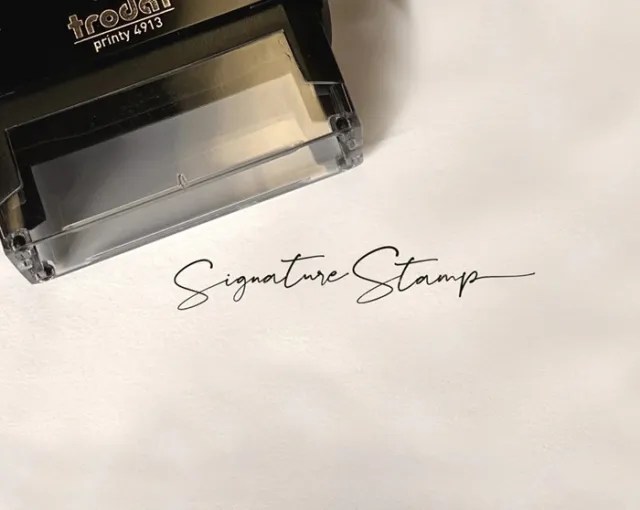
What Security Practices Matter When Using Signature Stamps in Banking?
Keep the Signature Stamp in a Secure Place
The first security practice is to keep the signature stamp in a safe location. It should not be left on an open desk or in a place where other employees or visitors can access it.
Banks can store the stamp in a locked drawer, cabinet, or secure storage area when it is not being used. Access should be limited to authorized staff who have a valid reason to use it.
Limit Access to Authorized Users
A signature stamp should only be available to people who are permitted to sign documents on behalf of the account holder or organization.
Banks can maintain a record of employees who are allowed to use a particular stamp. If an employee changes roles or leaves the organization, their access to the stamp should be removed immediately.
Check Documents Before Stamping
A signature stamp should never be applied to a document without checking the information first.
Before stamping a check, verify the recipient, amount, date, account details, and other important information. For other banking documents, check the details that require approval before applying the stamp.
Once a signature has been stamped, correcting the document may require additional steps. Therefore, checking the document first can prevent avoidable mistakes.
Use Approval Procedures
For business and banking transactions, a signature stamp should be used as part of an approval process. One person should not always have complete control over preparing, checking, and stamping a financial document.
This process creates an additional level of control and makes unauthorized transactions more difficult.
Keep Records of Stamp Usage
Keeping a record of signature stamp usage can help identify problems quickly.
The record can include the date, document type, transaction amount, and name of the person who used the stamp. It can be maintained electronically or in a physical register.
Protect Checks After Stamping
Checks that have already been stamped should be handled carefully. They should not be left unattended on desks, counters, or open shelves.
After stamping, checks should be stored securely until they are issued or processed. If a stamped check is damaged or cancelled, it should be disposed of properly so that the signature cannot be misused.
Review Bank Requirements
Different banks and financial institutions may have different requirements for signature stamps. Some may accept stamped signatures for certain transactions, while others may require a handwritten signature or additional authorization.
The question of “Signature Stamp For Checks Legal” can have different answers depending on the location, bank rules, account agreement, and transaction type.
Therefore, check with the bank before using a signature stamp for checks. This can help you understand whether the stamp is accepted and what controls may be required.
Replace a Lost or Compromised Stamp
If a signature stamp is lost, stolen, or suspected to have been copied, action should be taken immediately.
The account holder or authorized organization should contact the bank and explain the situation.
If the stamp is no longer required, it should also be destroyed properly so it cannot be used again. This also protects records.
Conclusion
These are some of the important security practices to follow when using signature stamps in banking. Keeping the stamp secure, limiting access, checking documents, recording usage, and following bank requirements can reduce the risk of unauthorized transactions.
A signature stamp can make banking paperwork easier, but it should always be handled carefully. By following proper security procedures, account holders and banks can use signature stamps while maintaining better control over financial documents.

