Play is one of the earliest ways children learn about their surroundings. From stacking blocks to pretending with toy kitchens, children begin to form ideas about numbers, shapes, language, and social behavior through simple activities. This is why toys play a major role in early learning. Understanding how toys help kids in early education gives parents and educators clarity on why play-based learning is effective and how it supports concept building at a young age.
The Role of Play in Early Learning
Children do not learn best through passive instruction. Instead, they learn by doing, observing, and repeating actions. Play creates a natural setting where children can explore ideas without pressure. Toys act as tools that guide this exploration. When a child plays, they test ideas, make mistakes, and try again. This repeated interaction helps children grasp basic concepts such as cause and effect, patterns, and relationships between objects.
Play-based learning also allows children to stay engaged for longer periods. Since the activity feels enjoyable, children are more open to learning and less resistant to challenges.
How Toys Introduce Basic Concepts
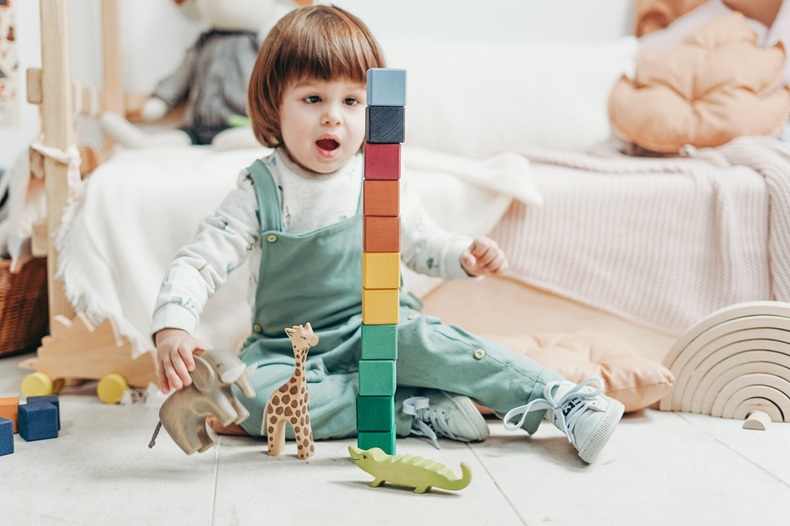
Toys are often structured around simple ideas that align with early learning goals. For example, puzzles introduce shape recognition and spatial awareness. Building blocks support counting, balance, and problem-solving. Even simple toys like balls teach movement, timing, and coordination.
These concepts are absorbed naturally. A child stacking blocks learns about height and balance without formal instruction. A toy car rolling down a ramp helps a child understand speed and motion. This method of learning feels natural and fits well with a child’s curiosity.
Learning Through Repetition and Practice
One of the strengths of toys is repetition. Children often repeat the same activity many times. While this may seem repetitive to adults, it helps children strengthen understanding. Each repetition builds confidence and reinforces learning.
For example, a child using alphabet blocks repeatedly begins to recognize letters and sounds. Over time, this repeated exposure helps with early reading skills. Toys allow practice without boredom because the activity remains engaging.
Problem-Solving and Logical Thinking
Many toys present small challenges that children need to solve. Shape sorters, matching games, and construction sets encourage children to think logically. When a piece does not fit, the child tries another option. This trial-and-error process builds reasoning skills.
Problem-solving through play also teaches patience. Children learn that solutions may take time. These skills later support academic learning, where children are required to think through tasks rather than memorize answers.
Social and Emotional Understanding Through Toys
Toys also help children understand social behavior and emotions. Pretend-play toys like dolls, action figures, or playsets allow children to act out real-life situations. Through this, children learn sharing, cooperation, and communication.
Role-play helps children express feelings they may not yet be able to explain with words. For example, a child playing with a doctor kit may act out experiences from a clinic visit. This helps them process emotions and understand social roles.
Language Development Through Play
Toys often encourage children to speak, name objects, and explain actions. Board games, story-based toys, and pretend-play activities support vocabulary growth. When children describe what they are doing, they practice sentence formation and communication.
Playing with others further improves language skills. Children learn to listen, respond, and take turns speaking. These interactions support early language development in a practical and relaxed setting.
Fine Motor Skills and Coordination
Many toys require hand movement and control. Activities such as stacking, drawing, or assembling parts improve fine motor skills. These skills are important for tasks like writing, cutting, and buttoning clothes later on.
Simple actions like grasping small objects or fitting pieces together strengthen hand muscles. This physical development supports academic tasks as children grow.
Connecting Play to Early Education Goals
Understanding how toys help kids in early education allows adults to select toys that support learning goals. Toys do not need to be complicated or electronic. Simple, well-made toys that encourage thinking, movement, and interaction often have the greatest impact.
When children are given time and space to play freely, learning happens naturally. The role of adults is to provide suitable toys and observe how children interact with them.
Conclusion
Toys help children understand concepts by turning learning into an active experience. Through play, children explore ideas, solve problems, practice skills, and express emotions. This approach supports early development across thinking, language, social, and motor areas. By recognizing the value of play-based learning, parents and educators can support children in building strong foundations for future learning through everyday play activities.
 Business In Solutions