Hologram fans have gained attention for their ability to create floating 3D visuals that appear to hover in mid-air. These devices work based on a simple but effective principle — persistence of vision. When rapidly spinning LED blades project light in a precise sequence, they trick the human eye into seeing a continuous image. This is how a holographic display is formed.
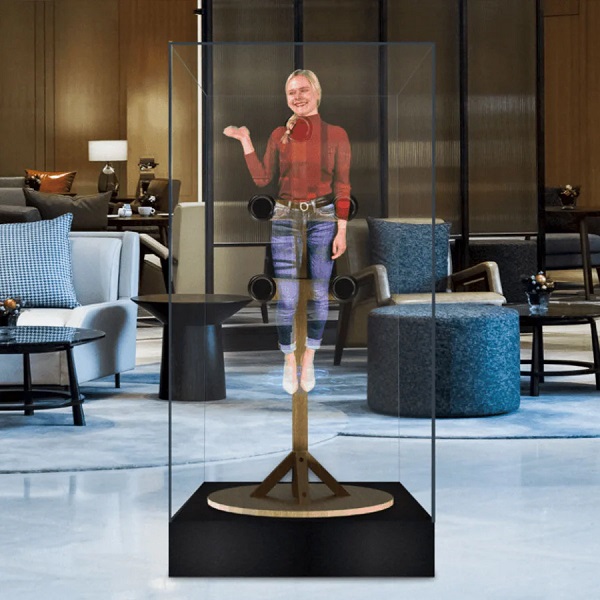
The fan itself consists of a set of narrow blades equipped with LED lights. As the fan spins at high speed, the LEDs flash in a programmed pattern that syncs with the blade’s position. This coordinated flashing creates a series of frames that appear to be a single 3D image suspended in space. Because the blades spin so fast, the individual lights blur together, allowing the viewer to perceive depth and motion.
To generate these displays, the device requires video files that are specially formatted. Most often, the content must be created with a black background and encoded to match the resolution and frame rate of the fan. These videos are uploaded to the device using an app or memory card, depending on the model. Once the content is loaded, the fan can begin projecting the illusion of three-dimensional visuals.
One of the key technical requirements is the rotational speed of the fan. If it spins too slowly, the human eye can detect gaps in the image. A high enough speed — typically around 700 to 1500 revolutions per minute — is necessary for a seamless display. Additionally, the LED quality and brightness significantly impact how well the image appears in different lighting conditions. For indoor use, most fans perform well, but in brighter environments, a more powerful setup might be needed.
Another important factor is synchronization. Some advanced models allow multiple fans to work together, creating larger images or even synchronized displays. This requires precise control of each fan’s timing, which is often managed through centralized software or wireless coordination.
Safety is also something to consider. Since the device uses spinning blades, most manufacturers include covers or mount them at a height to avoid accidental contact. While the blades are generally lightweight and not sharp, keeping them out of reach adds a level of precaution.
The use of a Hologram Fan has found applications in advertising, trade shows, retail stores, and event presentations. The ability to draw attention with a 3D effect makes it an effective tool for visual engagement. However, to get the most out of this technology, one needs to have properly formatted video content, a stable mounting setup, and an understanding of the lighting environment where it will be used.
In summary, a Hologram Fan creates 3D images through high-speed rotation and precise LED timing. With the right setup and properly prepared content, these fans can deliver impressive visual effects that captivate viewers and create a lasting impression.
 Business In Solutions